
Chocolibrium
A bean-to-bar craft chocolate store built around origin, ethics, and dietary transparency.
View archived version ↗This project is no longer live at its original domain. The link above opens a preserved archive copy, kept for design reference only.
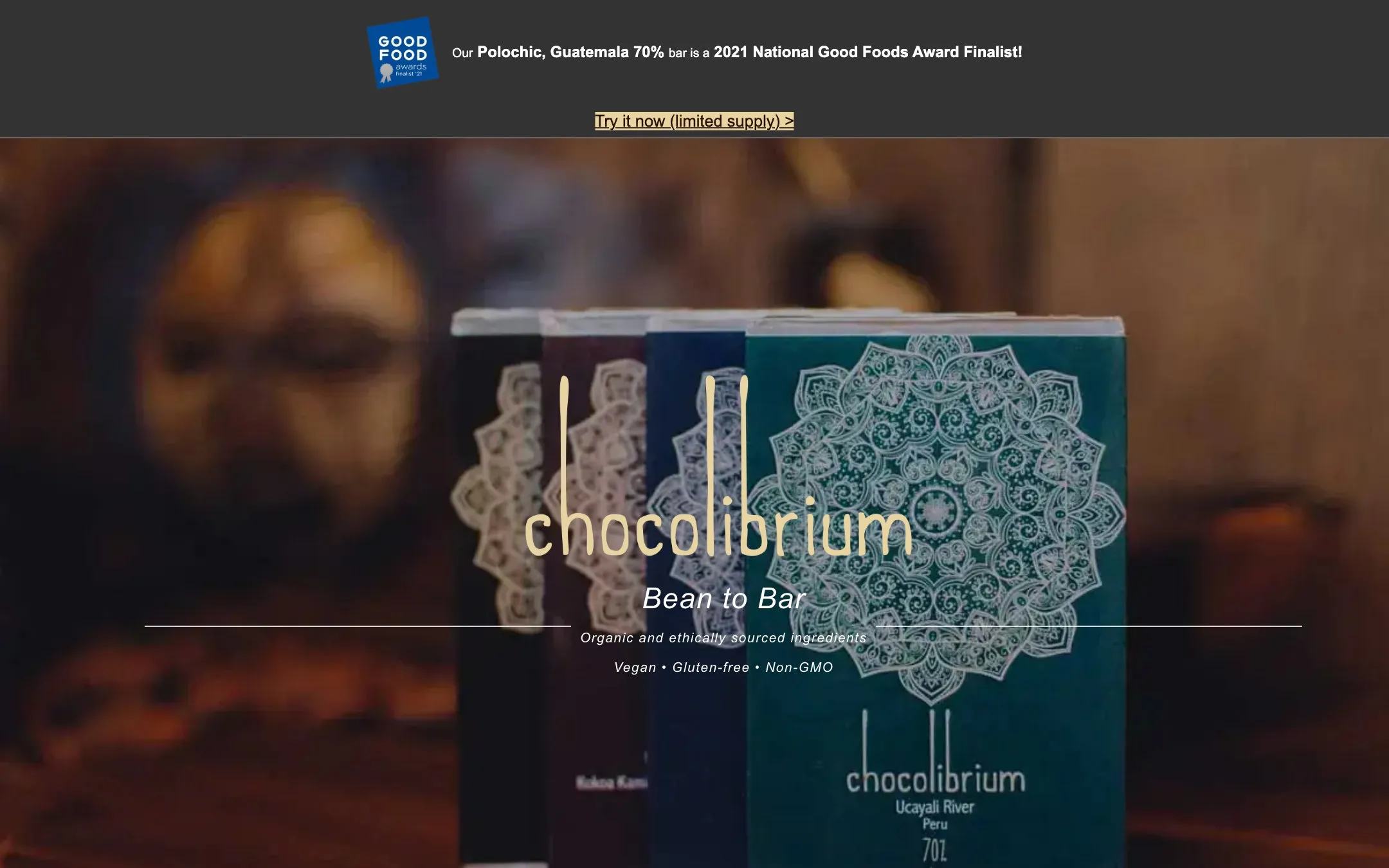
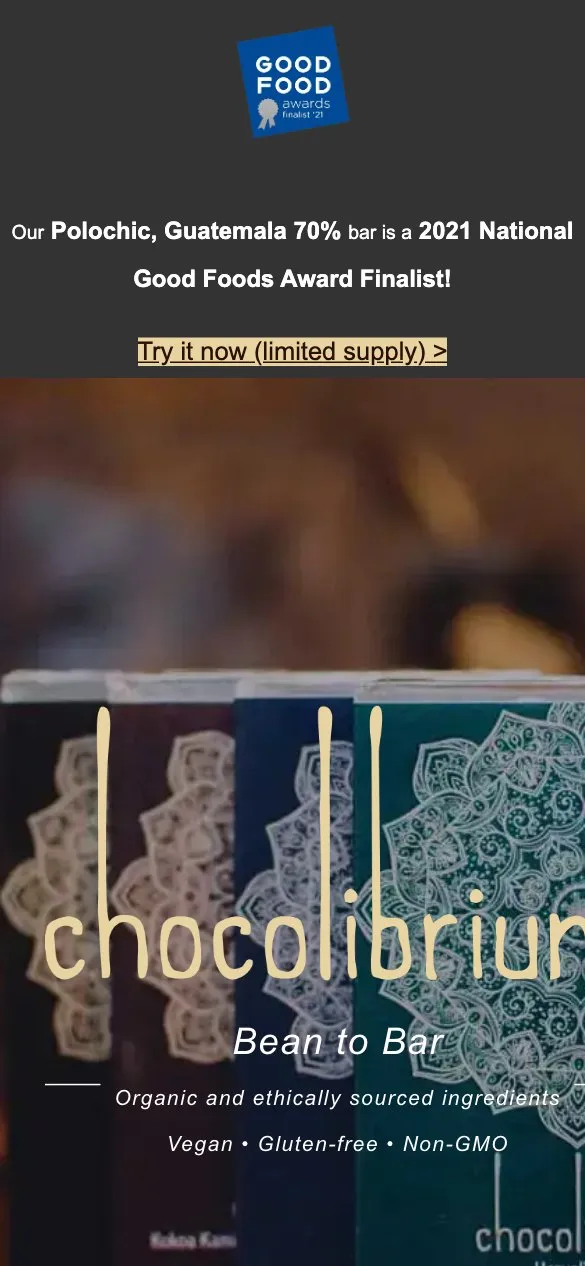
Chocolibrium was a bean-to-bar craft chocolate maker, and the site was built to carry a proposition that needs explaining before it can be sold.
“Bean to bar” is a genuine distinction in chocolate — it means the maker controls the process from raw cocoa bean through to finished bar, rather than melting and remoulding industrial couverture. It is also a term most shoppers have not encountered. The site handles this directly with a dedicated “what is bean-to-bar?” section rather than assuming familiarity. Explaining the category is the necessary first step to justifying a craft price, and a store that skips it is asking for a premium without giving a reason.
The dietary and sourcing position is stated immediately and without qualification: organic and ethically sourced ingredients, vegan, gluten-free, non-GMO. In craft food these are not secondary attributes — for a substantial share of buyers they are the filter applied before anything else is considered. Putting them in the opening statement rather than in a product specification table means a qualifying customer knows within seconds that this store is for them.
The product structure separates single-origin bars, beverages, and bonbons and truffles. Single origin is given its own category because it is how enthusiasts in this category actually shop — by provenance, much as with coffee or wine. Grouping everything as undifferentiated “chocolate” would discard exactly the distinction the brand is built on.
The store runs on WooCommerce, with the storefront designed to carry the product photography that a craft food purchase depends on.
This project is presented from an archived capture. The original store is no longer trading at its own domain, so the archive link is a design reference and is not a working shop.
Craft food also has an unusually informed customer. Buyers in this category frequently know more about origin, percentage, and processing than the average retail shopper, and they read labels closely before buying. Presenting sourcing and dietary information openly rather than burying it in product detail respects that knowledge and removes the friction of hunting for facts the brand was already proud of.
Related projects
BloomTown Flower Market
A wholesale and retail flower market site combining storefront, workshops, and event pre-orders.
View case study → E-commerceAmerican Western Awards
A promotional products catalogue organised by theme and category for browsing buyers.
View case study → Web Design & MarketingMiconi Marble & Tile
A website, social presence, and reputation strategy for a Marin County marble and tile installer.
View case study →Let’s talk about your project.
Tell us your goals, or book a free consult call — no pressure, no obligation.